
A letter from your insurance company about your electrical panel can be stressful. It might be a non-renewal notice, a request for an electrician’s report, or a home inspection that turned up a brand name you have never heard of. The good news is that old electrical panel insurance problems usually have a clear fix, with a paper trail you can show your insurer. This guide explains why insurers flag older panels and switchgear, which equipment tends to get flagged, and what to do next.
For a free estimate, call (877) 960-1122. You can also email info@leftcoastelectric.com.
Old Electrical Panel Insurance: Why Insurers Flag These Panels
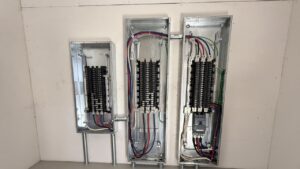
Your electrical panel has one main safety job: when a circuit is overloaded or shorted, the breaker or fuse has to shut it off before the wiring overheats. When an insurer, underwriter or home inspector sees equipment with a reputation for not doing that reliably, they treat it as a fire risk.
Insurers also look at the age and capacity of the system. Allstate notes that some older homes still have a 60-amp electrical service instead of the 100- or 200-amp service common today, and that outdated electrical systems can lead to higher rates or even denial of coverage.
In California, homeowners insurance has become harder and more expensive to find in many areas, so it pays to fix the problems you can control. Every insurer sets its own underwriting rules, so always confirm with your insurer or agent exactly what they need before you start work.
Panels and Wiring That Commonly Get Flagged
InterNACHI, the home inspector association, lists Federal Pacific Electric (FPE) Stab-Lok, Zinsco/GTE-Sylvania, Bulldog Pushmatic and Challenger as the problem panels inspectors run into most often, and its recommendation for these panels is replacement.
Federal Pacific Electric (FPE) Stab-Lok
The U.S. Consumer Product Safety Commission (CPSC) investigated FPE Stab-Lok residential breakers in the early 1980s. Its testing confirmed that many of the breakers failed certain UL calibration tests, which check whether a breaker trips when it should. The CPSC closed the investigation in 1983 for budget reasons, and in 2011 it clarified that it closed the matter without making a determination about whether the breakers are safe. That gray area is part of why so many inspectors and insurers still flag FPE panels.
Look for “Federal Pacific Electric” or “FPE” on the panel door or label, and “Stab-Lok” breakers.
Zinsco and Sylvania-Zinsco
According to InterNACHI’s inspection guide, early Zinsco panels used copper bus bars, but during copper shortages in the mid-1960s the copper was replaced with aluminum. That led to poor contact between breakers and the bus bar, and many panels have failed due to arcing. The problems continued after the brand was sold to Sylvania in the early 1970s. Inspectors are taught to recommend a full evaluation and possible replacement by a licensed electrical contractor.
Pushmatic and Challenger
InterNACHI groups Bulldog Pushmatic and Challenger panels with FPE and Zinsco. It notes there are no recalls on these panelboards, with the exception of about 1,000 Eaton/Cutler-Hammer panels in 2014 that were built on the Challenger design. Separately, the CPSC announced a 1988 replacement program for certain Challenger HAGF-15 and HAGF-20 ground-fault breakers made between February and April 1988.
InterNACHI also warns that most aftermarket replacement breakers for these older panels are not UL-approved and cannot be considered reliable.
Fuse Boxes and Undersized Service
A fuse box is not dangerous just because it uses fuses. But older fuse panels often go with small services, and a home that has added air conditioning, a remodeled kitchen or an EV charger may be asking far more of the system than it was built for. That is the kind of outdated system that can lead to old electrical panel insurance issues.
Knob-and-Tube Wiring
Sometimes the problem is not the panel but the wiring behind it. InterNACHI notes that many insurance companies refuse to insure homes with knob-and-tube wiring, and that exceptions are sometimes made where an electrical contractor has deemed the system safe. That is why a written evaluation from a licensed electrician matters. See our house rewiring services and our guide to full rewiring versus a partial upgrade.
Commercial Buildings: Aging Switchgear and IR Scans
Old electrical panel insurance questions are not limited to homes. Property managers and commercial building owners face a similar issue at a larger scale. An insurer’s loss-control or underwriting inspection may flag obsolete switchgear, fused disconnects with no available replacement parts, signs of overheating, or a lack of maintenance records.
The maintenance standard has also changed. NFPA 70B, which used to be a recommended practice, became the Standard for Electrical Equipment Maintenance on January 16, 2023. Its maintenance interval table calls for infrared thermography of electrical equipment, generally every 12 months and every 6 months for equipment in the poorest condition category.
An infrared (IR) scan helps find loose connections and hot spots before they fail, and the written report gives the insurer documentation. When equipment is past its useful life, the answer may be a replacement of the distribution equipment rather than more repairs. Our troubleshooting and diagnostics team handles infrared inspections and testing.
Got a Non-Renewal or Inspection Requirement? What to Do
Here are seven steps to take if a non-renewal or inspection requirement has raised an old electrical panel insurance issue.
- Read the notice carefully. In California, an insurer must send a written non-renewal notice at least 75 days before the policy expires, and the notice must give the specific reason, according to the California Department of Insurance. Find out exactly what the insurer flagged and what would satisfy it.
- Ask your insurer or agent what they need in writing. Some insurers want an electrician’s evaluation letter. Others want proof of replacement. Confirm before you schedule work.
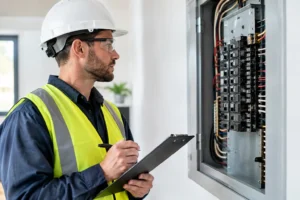
- Get a licensed electrician’s evaluation. Ask for a written report that names the panel brand, its condition, the service size and the recommended fix.
- Make the repair or replacement with a permit. A permitted upgrade creates the record insurers and buyers look for. Our California electrical permit guide explains when permits are required.
- Pass the final inspection. Our guide on how to prepare for an electrical inspection covers what inspectors check.
- Send the proof to your insurer. Keep the invoice, the finaled permit, and before and after photos together, and send copies to your agent or insurer.
- Shop early if you need to. Don’t wait until the last week of your policy. If you believe a notice was improper, the California Department of Insurance takes consumer calls at 1-800-927-4357.
This article is general information, not legal or insurance advice.
Replace the Panel or Swap the Breakers?
With the brands above, the usual recommendation from InterNACHI is to replace the whole panelboard, not individual breakers, because replacement breakers for these panels are often hard to find and many aftermarket versions are not considered reliable. A replacement is also a chance to right-size the service for how you use power today. Learn more about electrical panel upgrades.
For Insurance Brokers and Agents: Helping a Client Keep or Place Coverage
If you are working to place or keep a client facing old electrical panel insurance issues, or whose property has aging switchgear, a licensed electrical contractor can give you the documentation you need. Here is what Left Coast Electric can provide:
- An on-site evaluation of the panel, service or switchgear by a licensed electrician.
- A written condition report that identifies the equipment brand, service size, visible condition and our recommendation, with photos.
- Replacement or upgrade work with the permit pulled and the final inspection completed.
- A closeout package for the underwriter: invoice, finaled permit, and before and after photos.
- Infrared inspection reports for commercial switchgear and distribution equipment.
We do not interpret policy terms or tell underwriters what to accept. That is your call and theirs. Our job is to give you clear, factual documentation about the electrical system. To refer a client, email info@leftcoastelectric.com or call 877-960-1122, and we will contact them directly.
How Left Coast Electric Can Help
Left Coast Electric is a licensed electrical and low-voltage contractor based in San Dimas (CA #1105569, AZ ROC 352637, NV #0095572). We have completed 50+ projects across Southern California and provide commercial electrical service across California, Arizona and Nevada. For homes, we handle panel evaluations, permitted panel replacements and rewiring, and we follow one simple rule: “We leave your house like we were never there.”
We offer free estimates and 24/7 emergency service for homeowners and property managers. If you need help with old electrical panel insurance or have an inspection report in hand, call (877) 960-1122 for a free estimate. You can also email info@leftcoastelectric.com or send us a message. See our residential electrical services.
Frequently Asked Questions
Will my insurance company cancel my policy because of a Federal Pacific or Zinsco panel?
It depends on the insurer. Home inspectors commonly flag these panels, and some insurers ask about them, but each company sets its own rules for old electrical panel insurance. Ask your insurer or agent directly what they require, and get the answer in writing.
Can I just replace the breakers instead of the whole panel?
For FPE, Zinsco, Pushmatic and Challenger panels, InterNACHI recommends replacing the panelboard. Replacement breakers can be hard to find, and many aftermarket breakers for these panels are not considered reliable.
What documentation should I give my insurer after a panel replacement?
Ask your insurer what they want. Commonly useful items are the contractor’s invoice, the finaled permit from your city or county, and before and after photos of the panel.
Does a commercial building need an infrared scan?
NFPA 70B, now a mandatory standard where adopted, calls for infrared thermography of electrical equipment on a regular schedule. Your insurer may also request one. A licensed electrician can perform the scan and give you a written report.
I’m an insurance broker. Can Left Coast Electric evaluate a client’s panel and give me a report?
Yes. We can evaluate the panel, service or switchgear and provide a written condition report with photos that you or your client can share with the underwriter. Email info@leftcoastelectric.com or call 877-960-1122.
I’m a broker with a commercial client facing an underwriting requirement. What can you document?
We can provide infrared inspection reports, condition reports on switchgear and distribution equipment, and permit and inspection records for any replacement or upgrade work we complete in California, Arizona or Nevada.