
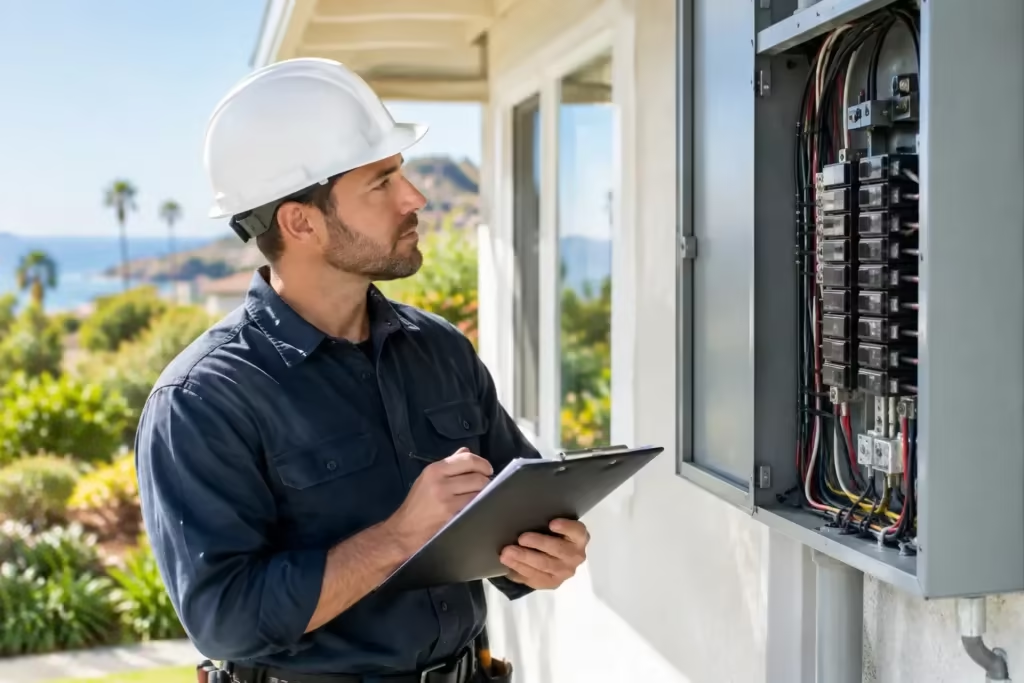
A panel upgrade that looks straightforward can become a failed inspection, a stalled utility connection, or an expensive correction if the permit process is treated as an afterthought. California electrical permit requirements exist to verify that electrical work is designed, installed, and inspected for safety – not simply to create paperwork. For homeowners, property managers, developers, and general contractors, the right question is not whether a permit is inconvenient. It is whether the scope of work changes the building’s electrical system, safety systems, or service capacity.
When Is an Electrical Permit Required in California?
In most California jurisdictions, a permit is required when work involves installing, altering, replacing, extending, or repairing electrical systems beyond minor maintenance. The California Electrical Code establishes the statewide baseline, but the authority having jurisdiction – typically the city or county building department – administers permits and may enforce local amendments. That local layer matters. Requirements, fees, submittal documents, inspection scheduling, and turnaround times can differ significantly from one jurisdiction to the next.
Permits are commonly required for panel replacements and service upgrades, new circuits, whole-home rewiring, electrical work connected to an addition or remodel, electric vehicle charging equipment, solar and battery installations, standby generators, commercial tenant improvements, and new construction. Work involving low-voltage systems may also require permits depending on the system, occupancy, fire-life-safety integration, and local rules.
A simple like-for-like replacement can sometimes qualify as minor work, but that does not automatically make it permit-exempt. Replacing a light fixture may be treated differently than installing a new circuit for that fixture. Replacing a receptacle is different from adding receptacles, changing wiring methods, or modifying a circuit. When the scope is unclear, confirming requirements with the local building department before work begins is the practical move.
California Electrical Permit Requirements by Project Type
Residential panel upgrades and rewiring
A panel upgrade nearly always requires a permit and inspection. The work affects overcurrent protection, grounding and bonding, service equipment, circuit capacity, and potentially the utility connection. If an older home has a Federal Pacific, Zinsco, undersized, damaged, or overloaded panel, a properly permitted upgrade creates a documented path to bring the work into current code requirements where applicable.
Whole-home rewiring is also permit-driven work. Older homes can contain deteriorated insulation, ungrounded circuits, overloaded branch wiring, or prior alterations that are not visible until walls are opened. A permit and inspection process helps ensure the new installation is sized correctly, grounded properly, protected where required, and safely integrated with the existing service.
Remodels, additions, and new circuits
Kitchen remodels, bathroom renovations, room additions, accessory dwelling units, and garage conversions commonly trigger electrical permits. These projects often require new circuits, ground-fault and arc-fault protection, updated receptacle spacing, lighting controls, smoke and carbon monoxide alarm coordination, and load calculations.
The electrical scope should be coordinated early with architectural, mechanical, and plumbing plans. Waiting until framing is underway to address panel capacity, dedicated appliance circuits, or service limitations creates avoidable change orders. For a general contractor, a complete electrical plan before rough-in protects the schedule. For a homeowner, it reduces the risk of paying to reopen finished walls.
Solar, battery storage, EV chargers, and generators
Electrification projects can involve more than one approval path. Solar systems, battery energy storage, EV chargers, and generators generally require electrical permits, and they may also require structural review, fire department review, utility approval, or separate planning documentation. Left Coast Electric designs and installs commercial solar for businesses in California, Arizona, and Nevada; we do not install residential solar.
An EV charger is a good example. The charger may be physically simple to install, but the electrical load is continuous and must be calculated correctly. A property with limited service capacity may need load management, a panel upgrade, or a service upgrade before the charger can be installed safely. The lowest initial quote is not always the lowest project cost if it ignores the actual capacity of the property. Our EV charger installation service starts with that load check, and we can supply the charger or install one you already own.
Commercial and industrial improvements
Commercial electrical permits often cover a wider scope: distribution equipment, tenant improvement circuits, lighting controls, emergency systems, equipment connections, temporary power, data and communications infrastructure, access control, and specialty systems. The permit set may need electrical plans, single-line diagrams, load calculations, fixture schedules, and product information.
For warehouses, manufacturing facilities, medical environments, restaurants, and mission-critical spaces, the work may also be reviewed against occupancy-specific requirements. The inspection process is not just a final checkpoint. It confirms that critical installations are accessible, labeled, protected, and built to the approved plan.
That is the permit path on our commercial tenant improvement work, including the full restaurant tenant improvement at North Italia in Brea, Quick Quack car wash sites across Southern California, and greenhouse and site electrical at the LA County Arboretum in Arcadia.
What the Permit Process Usually Looks Like
The process begins by defining the scope accurately. A contractor should identify the existing electrical conditions, expected loads, required circuits, equipment ratings, and any utility or service changes before submitting paperwork. For larger jobs, that means coordinated drawings and calculations. For smaller residential work, the jurisdiction may accept a simpler permit application and field description.
After the permit is issued, work proceeds through required inspections. The exact sequence depends on the project, but rough inspection typically occurs after wiring and equipment are installed while critical connections remain visible. Final inspection happens after devices, covers, labels, and finished equipment are in place.
Do not cover wiring before the required rough inspection. Drywall, ceilings, insulation, or equipment enclosures can conceal the very items an inspector must verify. If work is covered prematurely, the correction may require demolition and reinstallation. That is a preventable delay on any jobsite.
Utility-related work adds another layer. A service upgrade may require coordination with the serving utility for disconnects, meter equipment, clearances, and energization. Permit approval does not automatically mean the utility is ready to reconnect or install service. Build utility lead time into the schedule, particularly on projects with a hard opening date.
Who Pulls the Permit?
A licensed electrical contractor commonly pulls the permit for contracted electrical work, although homeowners may be allowed to obtain permits for work on their own primary residence in some jurisdictions. The rules and limitations vary locally, and owner-builder status does not remove the obligation to meet code or pass inspection.
For commercial projects, the permit applicant should match the project’s contractual and licensing structure. Clear responsibility matters because the permit holder is accountable for corrections, inspections, and final sign-off. A general contractor, developer, or property owner should not assume that a subcontractor’s verbal assurance means a permit has been issued. Confirm the permit number, approved scope, and inspection status in writing.
California also has contractor licensing requirements for work that exceeds applicable threshold amounts or requires a permit, with limited exceptions. Electrical contracting is specialized work. Hiring an appropriately licensed, bonded, and insured contractor protects the project from unqualified installation, permit complications, and incomplete closeout.
Common Permit Mistakes That Cost Time and Money
The most expensive problems usually begin before installation. An undersized service is missed during estimating. A tenant improvement plan fails to account for new equipment loads. A homeowner assumes an EV charger can share capacity that does not exist. A contractor starts work before verifying local amendments or approved plans.
Other frequent issues include incomplete panel labeling, improper grounding and bonding, missing working clearances, unprotected conductors, incorrect breaker sizing, unsupported raceways, and unavailable equipment documentation. These are not cosmetic punch-list items. They affect safety, maintainability, and approval.
Four habits prevent many of these failures:
- Verify the local permit requirement before ordering equipment or mobilizing labor.
- Perform a real load calculation instead of estimating capacity from an existing panel label.
- Keep approved plans and equipment specifications available for the inspector.
- Schedule inspections around construction milestones before walls or ceilings are closed.
Why Permit-Ready Work Protects the Project
A permit creates a record that the work was reviewed and inspected. That record can matter during a property sale, insurance review, financing process, tenant turnover, warranty claim, or future renovation. More immediately, it provides an organized framework for building safe electrical systems that can handle the intended load.
For a commercial owner, permit-ready execution protects occupancy dates and reduces risk at closeout. For a homeowner, it protects the investment in a panel upgrade, remodel, EV charger, or electrical modernization. The process may add planning time upfront, but unpermitted corrections add far more time when a project is already underway.
The strongest electrical projects start with a clear scope, accurate load assessment, and a permit strategy matched to the local jurisdiction. Left Coast Electric (CA Lic #1105569) approaches electrical work with that standard in mind: plan it correctly, install it cleanly, and keep the project ready for inspection from the start. Based in San Dimas, we pull permits and handle inspections for homeowners, property managers, and general contractors across Los Angeles County, the Inland Empire, and Orange County, including San Dimas, Claremont, La Verne, Glendora, Pomona, Covina, and Upland. For homes, our residential electrical services cover permitted panel upgrades, rewiring, and lighting, with 24/7 emergency service when something can’t wait.
Get a Free Estimate on Your Permitted Electrical Project
Planning a panel upgrade, remodel, EV charger, or tenant improvement? Call Left Coast Electric at (877) 960-1122, or request your free estimate. We’ll review the scope, check the load, and map out the permit and inspection path for your city before work starts.


