
A poorly lit parking area creates problems long before a lamp fails. It affects pedestrian safety, vehicle visibility, security perception, and the overall condition of a property. Knowing how to upgrade parking lights means more than replacing old fixtures with LEDs. The best result comes from evaluating light levels, electrical capacity, control strategy, mounting conditions, and local code requirements before work begins.
For commercial properties, an upgrade can reduce operating costs while making entrances, drive lanes, walkways, loading areas, and accessible parking spaces easier to navigate after dark. For multifamily properties and homes with larger private lots or driveways, the same principles apply: place usable light where people and vehicles need it, without creating glare for neighbors or drivers. At Left Coast Electric, we treat parking and site lighting as part of the full electrical scope on commercial and industrial projects across California, Arizona, and Nevada.
Start With the Parking Area, Not the Fixture
The first question is not which fixture looks brightest. It is where light is currently falling short. Walk the site after dark and identify dead zones, harsh shadows, excessive glare, inconsistent color, and fixtures that cycle, flicker, or stay dark. Pay close attention to pedestrian paths, curb transitions, building entrances, stairways, payment stations, dumpsters, gates, and loading zones.
Older high-intensity discharge systems often produce uneven output as lamps age. A parking lot may appear adequately lit from a distance while still having weak illumination at ground level. That distinction matters. Drivers need visual guidance across the lot, but pedestrians need enough light to recognize changes in elevation, see potential hazards, and feel comfortable walking to their destination.
A qualified electrical contractor can document existing fixture locations, pole heights, circuit conditions, and likely problem areas. On larger commercial sites, a photometric layout is the right next step. This calculation maps projected light levels across the property before fixtures are ordered, helping the owner avoid expensive guesswork. That assessment is how our lighting upgrades work starts.
How to Upgrade Parking Lights With the Right LED Design
LED parking lot fixtures are the standard choice for most upgrades because they use less energy, have longer service lives, and offer far better control over distribution than legacy metal halide or high-pressure sodium lighting. Still, LED is not a one-size-fits-all answer.
Fixture wattage should be selected based on mounting height, pole spacing, surrounding ambient light, and the purpose of the area. Installing the highest-output fixture available can create glare, light trespass, and unnecessary energy use. A properly designed lower-wattage fixture with the correct optical distribution may provide better ground coverage than an overly powerful unit aimed in the wrong direction.
Color temperature also changes how a parking area performs. Many properties choose 4000K for a clear, neutral appearance that supports visibility without looking overly blue. A 5000K fixture can provide a cooler, more daylight-like appearance and may suit industrial yards or high-activity areas. Warmer options may be appropriate near residential buildings or hospitality settings where reducing perceived harshness is a priority. Local ordinances, neighborhood context, and project goals should guide that decision.
Optics deserve equal attention. Type III, Type IV, and Type V distributions are designed for different applications, such as perimeter poles, side-of-building locations, roadway edges, or open parking fields. The fixture must direct light onto the intended surface, not into passing traffic, adjacent windows, or the night sky.
Inspect the Electrical Infrastructure First
A lighting retrofit is also an electrical project. Before installing new fixtures, inspect the branch circuits, breakers, conductors, poles, handholes, photocells, contactors, and panel capacity. Old parking lot systems can hide corroded connections, water intrusion, damaged underground conductors, failing pole bases, or circuits loaded beyond their practical condition.
LED fixtures typically reduce load substantially, but that does not eliminate the need for a proper assessment. Voltage compatibility, inrush current, driver requirements, surge protection, grounding, and disconnecting means all need to be addressed. In commercial installations, an electrician should also verify that circuit identification and panel schedules are accurate. This makes future maintenance safer and faster. On some sites, that review leads into electrical panel upgrades before new fixtures go in.
Pole condition is especially important. Rust at the base, damaged anchor bolts, deteriorated concrete, or compromised access covers can turn a lighting upgrade into a safety issue. Replacing a fixture on an unsound pole only postpones the real repair.
Build Controls Into the Upgrade
Parking lights should run when they are needed, not at full output all night by default. Controls improve efficiency and can extend fixture life, but the right approach depends on site use.
A basic photocell can turn lights on at dusk and off at dawn. For a small private lot, that may be sufficient. Commercial properties often benefit from an astronomical time clock, centralized lighting controls, motion sensing, or dimming schedules. For example, a retail center may operate at full output during business hours, then reduce lighting levels after closing while maintaining enough illumination for staff, security, and late-night access.
Networked controls can provide fixture-level monitoring and remote scheduling, which is useful across larger portfolios or multi-building campuses. The trade-off is higher initial cost and greater system complexity. Owners should choose controls that their maintenance team can realistically operate and support, rather than paying for features that will not be used.
Emergency and egress lighting require separate consideration. Parking lot fixtures generally do not replace code-required emergency lighting at building exits, corridors, stairways, or designated egress paths. The lighting plan should coordinate exterior site lighting with the building’s life-safety systems.
Plan for Code, Permits, and Light Trespass
Parking lot lighting is governed by more than electrical installation rules. Projects may be subject to local energy codes, zoning standards, dark-sky requirements, accessibility considerations, and permitting requirements. California projects, in particular, may involve energy-efficiency provisions and local jurisdiction requirements that affect controls, power allowances, and documentation. Arizona and Nevada jurisdictions can also have distinct lighting ordinances, especially where glare and sky glow are a concern.
A licensed contractor should confirm permit needs before work starts and perform the installation to the applicable electrical code. This includes proper wiring methods, weather-rated equipment, grounding and bonding, working clearances, and equipment labeling. Inspection-ready work protects the owner from failed inspections, delayed openings, and liability exposure.
Light trespass should be treated as a design issue, not an afterthought. Shielding, fixture orientation, mounting height, and dimming can keep illumination on the property while preserving visibility. This is particularly important for lots next to residences, public streets, or neighboring businesses.
Choose a Retrofit Scope That Matches the Property
Not every site needs a full replacement. If poles, wiring, and distribution equipment are in good condition, a fixture retrofit may deliver the strongest return. If the site has repeated electrical faults, badly deteriorated poles, poor fixture placement, or expansion plans, a broader redesign is usually the smarter investment.
A practical upgrade plan typically evaluates these five areas:
- Existing light levels and areas with poor visibility
- Fixture output, optics, color temperature, and mounting height
- Circuit condition, panel capacity, poles, and underground wiring
- Controls, scheduling, dimming, and maintenance access
- Permit, energy-code, and local lighting requirements
The project should also account for maintenance. Select fixtures with durable housings, appropriate ingress protection, reliable drivers, and accessible components. Standardizing fixture families where possible can simplify future stocking and repairs. A lower purchase price does not help if fixtures fail early or replacement parts are difficult to obtain.
Avoid Common Parking Lighting Mistakes
The most common mistake is treating brightness as the only measure of success. Excessive light can make a lot less comfortable by creating glare and sharp contrast between bright and dark areas. Good lighting is balanced, controlled, and placed with a purpose.
Another mistake is replacing fixtures without correcting failed controls or damaged infrastructure. A new LED fixture cannot solve a deteriorated underground splice, a failing contactor, or a pole that is no longer structurally sound. Finally, owners should avoid installing unlisted fixtures or relying on unqualified labor for exterior electrical work. Outdoor lighting faces heat, wind, moisture, vibration, and electrical exposure. It needs to be installed accordingly.
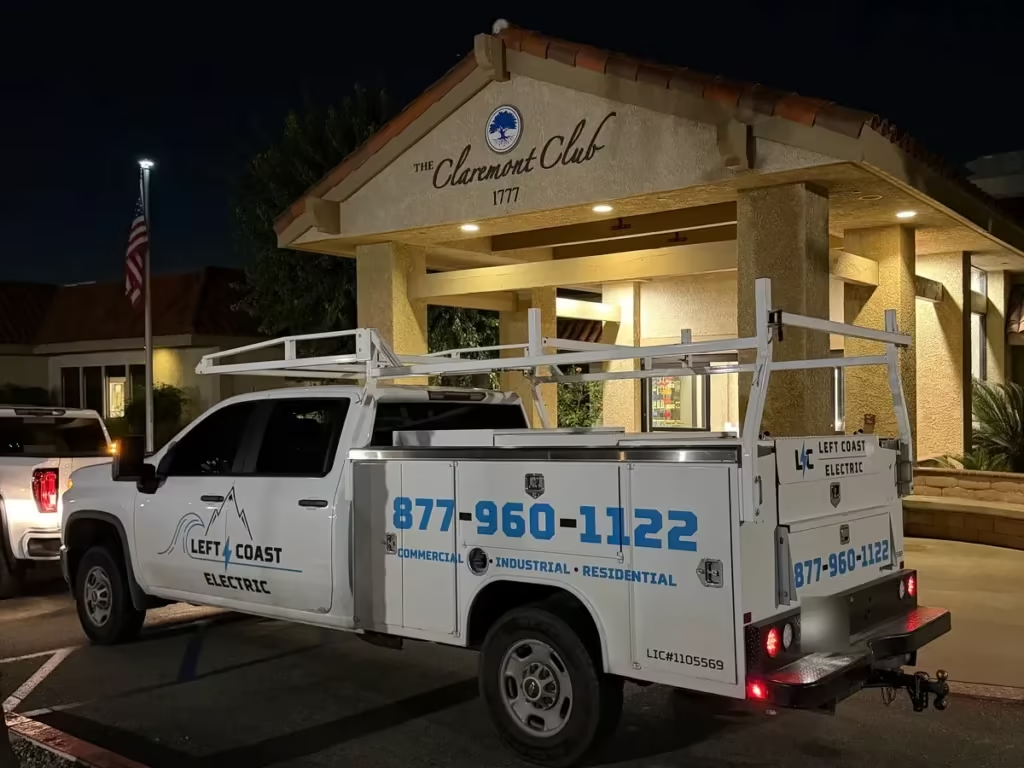
Left Coast Electric (CA Lic #1105569) is a commercial and industrial electrical contractor based in San Dimas, CA. We have completed lighting and exterior electrical work across Southern California, including the Claremont Club lighting retrofit, LA County Arboretum greenhouse and site electrical, and restaurant builds like North Italia in Brea. You can see more of that work on our projects page. When something fails after hours, our 24/7 emergency service keeps the property usable.
A parking lighting upgrade should leave the property easier to use after dark and easier to manage over time. When the design, electrical work, and controls are handled as one coordinated scope, the result is safer coverage, lower operating costs, and lighting that performs when the property needs it most.
Get a Free Parking Lighting Estimate
Ready to fix dark lots, glare, or aging poles and controls? Call Left Coast Electric at (877) 960-1122, or request your free estimate. We’ll walk the site and recommend a lighting plan built around how your property actually operates after dark.


